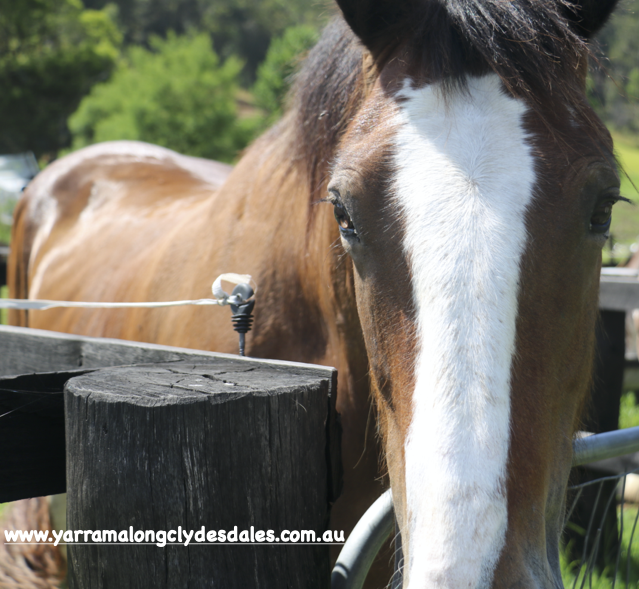
Bulahdelah, Mid North Coast NSW

Clydesdale Experience Tour NSW

Two hours on a real working farm. Real horses. Real harness. 30 years of experience — and one very cheeky donkey.

4
Working Clydesdales
30+
Years Experience
2hrs
Hands-On Session
800kg
Gentle Giants
Hercules the Clydesdale horse at Bulahdelah NSW

What Makes This Different

Not a Petting Zoo. A Working Farm.

Most horse experiences in NSW put you in a paddock to pat a horse and take a photo. That is not what this is.

At Bulahdelah Clydesdales, you are visiting a genuine working property where Clydesdales are put through a real working demonstration under full harness. You will see what a heavy horse collar looks like on a horse that fills it. You will hear the creak of leather traces going taut. You will understand, in a way that no photograph or documentary can convey, why the Clydesdale built this country.

Your host has been working with heavy horses for more than 30 years. This is not a scripted tourist attraction. It is an invitation to step inside a tradition that is rapidly disappearing from Australian life — guided by someone who has lived it.

The session is kept deliberately small and personal. There are no crowds, no queues, and no rush. Just you, the horses, and a morning you will not forget.
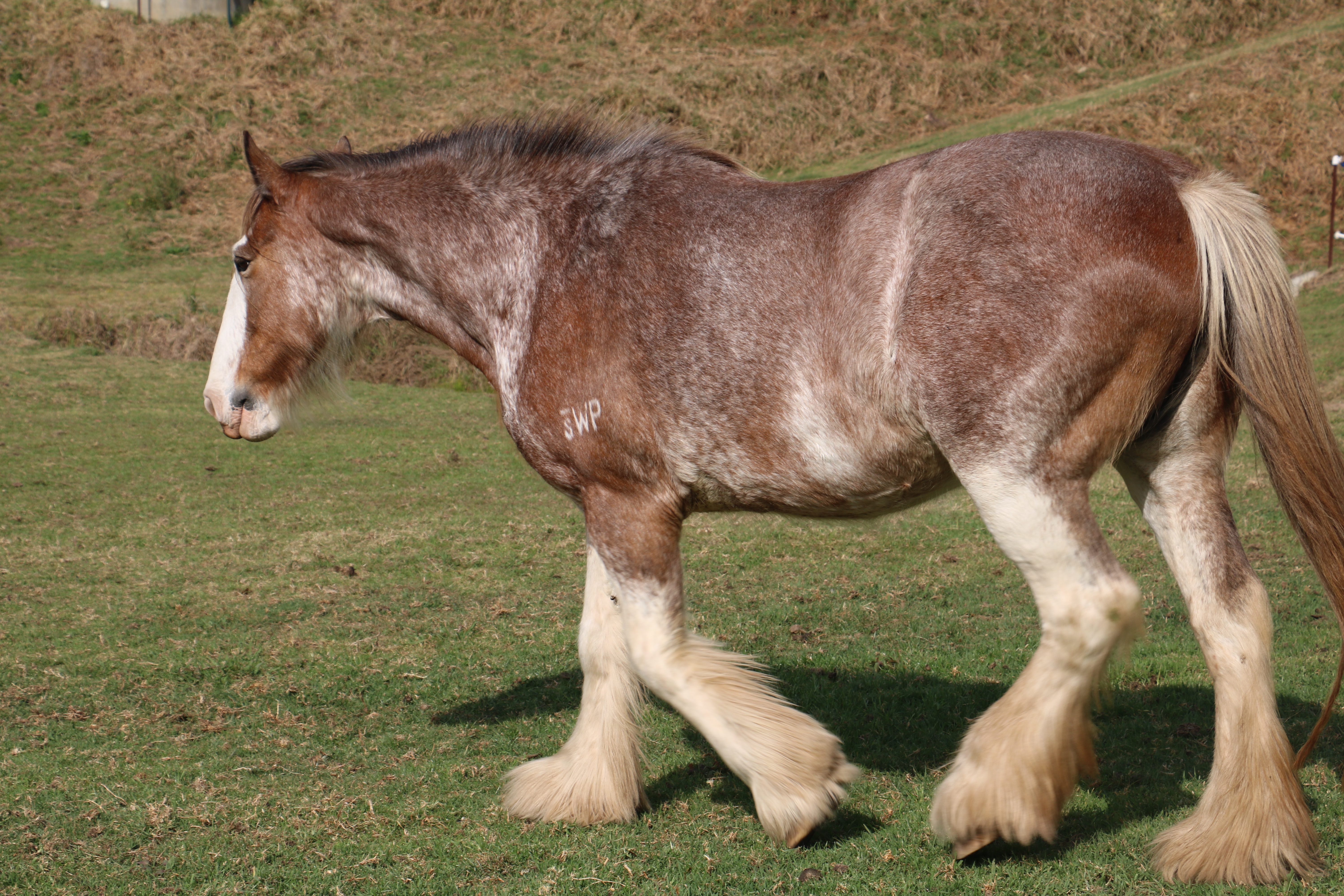
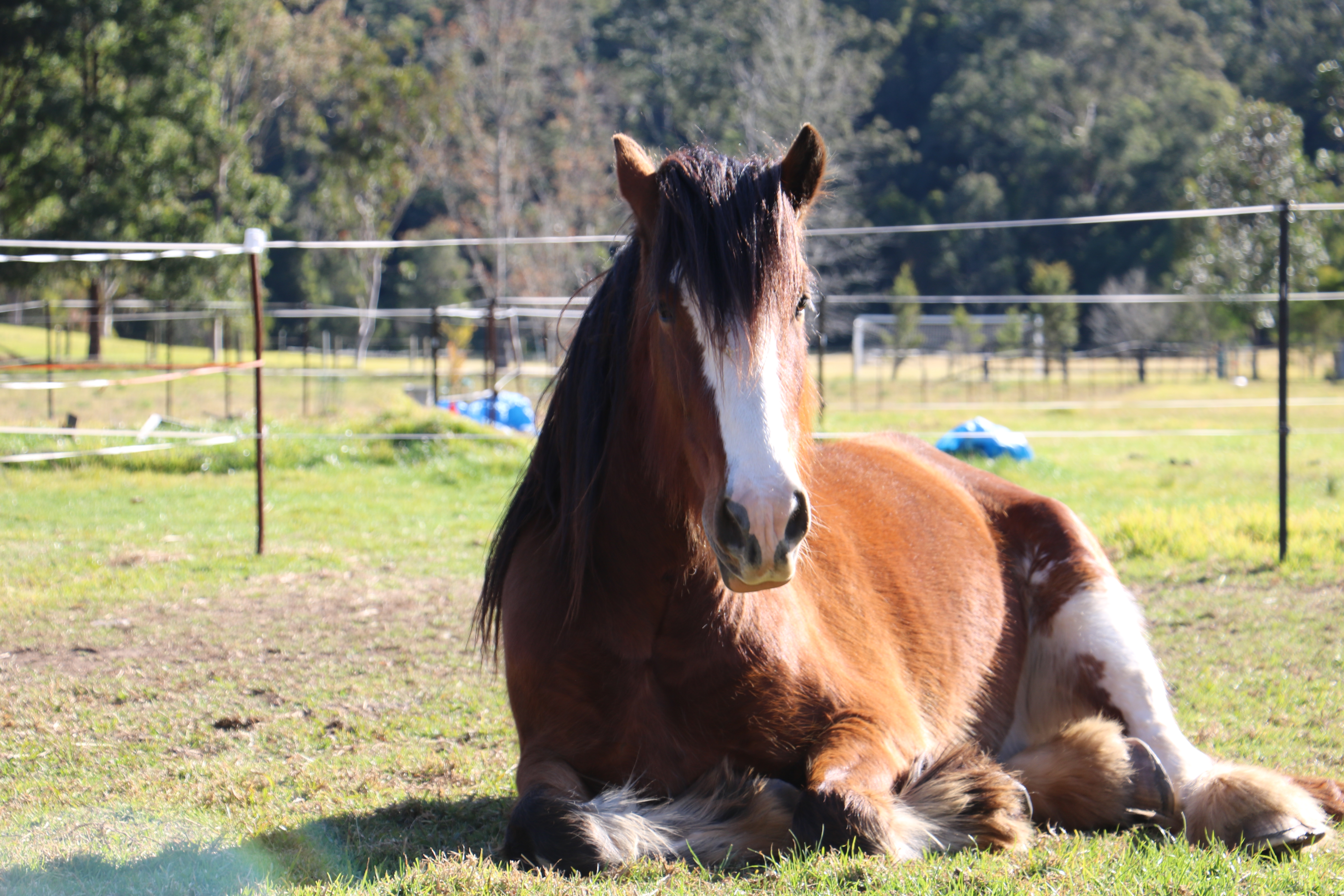
Your 2-Hour Session

What Happens on the Day

Sessions run at 10am by appointment. Here is exactly what you can expect from the moment you arrive.

01
Welcome & Orientation

Arrive at the property and settle in. Your host introduces you to the farm, its history, and what the next two hours will look like. Comfortable undercover seating is available. There is no rush — questions are welcome from the first moment.

02
Meet the Horses

Walk out to the paddock and be introduced to Dusty May, Hercules, Jax, and Murphy one by one. Your host explains each horse's character, history, and role on the farm. You will quickly learn that 800 kilograms of horse can have a very distinct personality.

03
The Harness Explained

The full working harness is laid out for you to examine up close — leather collar, hames, traces, breeching, and all the ironwork that connects a horse to its load. You can touch and handle the pieces. Your host explains what each component does and how it distributes the enormous pulling force of a heavy horse.

04
Working Demonstration

This is the heart of the session. Watch as one or more horses are harnessed — fully, properly, as they would have been for a day's work — and put through a genuine working demonstration. This is not theatre. It is the real thing, done by someone who has been doing it for three decades. Photography welcome.

05
Hands-On Time & Q&A

The final portion of your session is yours. Pat the horses, ask every question you have, take your photographs, and spend time in close contact with animals that once shaped the Australian landscape. Children especially tend to linger here. Murphy the donkey will ensure no one leaves early.

The Horses

Meet Dusty May, Hercules, Jax & Murphy

Four working Clydesdales and one very opinionated donkey — all waiting to meet you.

Dusty May Clydesdale horse NSW

Dusty May

Hercules Clydesdale horse NSW

Hercules

Jax Clydesdale horse NSW

Jax

Murphy donkey Bulahdelah NSW

Murphy

The Individuals

Four Horses. Four Characters.

Every visitor quickly discovers that Clydesdales are not interchangeable. Each horse on this property has a distinct personality, and within minutes you will have a favourite.

Dusty May

Mare — The Elegant One

Dusty May is the mare of the group, and she carries herself accordingly. Elegant in movement and unhurried in manner, she has a quiet confidence that puts first-time visitors immediately at ease. She is the horse that tends to win over people who arrive nervous — her gentleness is immediately readable even to those who have never been near a horse. Dusty May reminds visitors that grace and power are not opposites: they are, in a Clydesdale, the same thing.

Hercules

Gelding — The Magnificent One

Hercules is the one that silences a crowd. When he walks out fully harnessed, there is a moment — every single time — where visitors simply stop talking. He is a big horse with a presence that matches his name. Under harness he is composed and powerful, showing exactly what these animals were bred to do. He is not showy for the sake of it; his impact comes from pure, honest substance. Hercules is the reason people drive three hours from Sydney to stand in a paddock on a Tuesday morning.

Jax

Gelding — The Curious One

Jax is the youngest of the working horses and brings an energy that the others have long since grown out of. He is curious about everything — your camera, your hat, the zip on your jacket — and has no concept of personal space, which visitors find either immediately endearing or very funny (usually both). He loves attention and will position himself to receive it with a shamelessness that gets a laugh every time. Jax is in the process of learning everything Hercules already knows, and watching that process up close is itself worth the visit.

Murphy

Donkey — The Scene-Stealer

Murphy is not a Clydesdale, and he is the first to ensure you know he does not care. He is a donkey of great personal conviction and a suspicion that every visitor has arrived specifically for him — which, frankly, many of them have. Murphy has a way of appearing precisely when a photograph is being taken, inserting himself into moments he was not invited to, and making sounds at volumes that surprise people who have never been next to a donkey in full voice. He is a firm favourite with children and adults alike. He is not for sale and he is not negotiable.

Visitor experiencing Clydesdale tour at Bulahdelah NSW

The Experience

Close Enough to Feel the Ground Shake

There is no way to understand a Clydesdale from a distance. You need to be beside one.

A photograph does not prepare you for the sound of heavy hooves on packed earth, or the way the air moves when an 800-kilogram horse turns toward you. You do not understand the scale until you are standing next to it. And you do not understand the temperament — the extraordinary, almost impossible gentleness of an animal this large — until you feel it yourself.

That is what this experience provides. Not a photo opportunity with a horse in the background. An actual encounter. Your host is beside you throughout, providing context, answering questions, and ensuring that both you and the horses are comfortable at every step.

Visitors who are nervous about being near large animals consistently report that within 15 minutes of arrival, their anxiety has given way to something closer to wonder. The horses are entirely accustomed to visitors and managed by someone who knows their every mood and habit.

Book Your Session

The Breed

The Clydesdale: Australia's Working Heritage

The Clydesdale originated in Lanarkshire, Scotland — historically called Clydesdale — in the early 18th century, bred as a heavy draught horse capable of working the land and hauling coal from the mines. By the late 1800s, the breed had arrived in Australia in significant numbers, and it rapidly became the engine of the colonial agricultural economy.

Before the internal combustion engine, Australia ran on Clydesdale power. They cleared land, broke soil, hauled timber, pulled drays through city streets, and worked the harvest. At the peak of their use in Australia in the early 20th century, it is estimated that over a million Clydesdales were working across the country. They built the farms that fed the nation.

The arrival of the tractor in the 1920s and 1930s began a collapse in numbers that has never been reversed. The Clydesdale is now classified as a vulnerable breed by the Rare Breeds Trust of Australia. The working knowledge — how to harness them, how to handle them, how to work them — is held by fewer and fewer people with each passing decade.

A Clydesdale stands between 16 and 18 hands tall (roughly 163 to 183 centimetres at the shoulder) and weighs between 700 and 1,000 kilograms — with some larger animals exceeding that. Despite their size, they are renowned for their calm and willing temperament. They are not horses that spook easily or challenge their handlers unpredictably. They are, by nature, cooperative animals — which is precisely why they were trusted with the work that built this country.

Their distinctive feathering — the long silky hair that falls over the lower legs and hooves — is one of their most recognisable features, along with their broad, kind faces and their characteristically high-stepping movement under harness. When a well-matched pair of Clydesdales moves together in harness, it is one of the most impressive sights in Australian agricultural tradition.

Clydesdale Facts

Origin Lanarkshire, Scotland
Height 16–18 hands
Weight 700–1,000 kg
Temperament Calm, willing, gentle
Peak in Australia ~1 million (c. 1910)
Conservation status Vulnerable (RBTA)
Lifespan 20–25 years
Pulling force Up to 8,000 kg

Living History

The Full Working Harness

Most Australians have never touched a working heavy horse harness. Most never will. On this tour, you can handle each piece and understand what it does.

A full working harness for a Clydesdale is a complex, beautifully engineered system of leather, iron, and brass that can weigh 50 kilograms or more. Each piece has a specific mechanical function — distributing load, directing movement, providing control — and each piece is the result of centuries of refinement by people who depended on getting it right.

The Harness on Display

The full working harness is laid out and explained piece by piece during your session. You are welcome — encouraged — to touch and handle the components. This is not a museum exhibit behind glass. It is a working harness that has been used on these horses, and understanding its weight, its texture, and its construction changes how you see the working demonstration that follows.

For many visitors, the harness explanation is unexpectedly the most compelling part of the session. Your host knows these pieces intimately — the fitting, the care, the history of each component — and the explanation brings the working demonstration to life in a way that purely watching it cannot.

  • Collar The padded leather collar sits around the horse's neck and shoulders — the primary load-bearing surface through which the horse transmits its pulling force.
  • Hames Two curved metal arms that fit into grooves on the collar and carry the draft hooks — the connection point between the horse and whatever it is pulling.
  • Traces The long leather straps running from the hames back to the implement or vehicle. These are what transmit the horse's power into useful work.
  • Breeching The rearward harness assembly that allows the horse to slow or stop a load — the braking system of the whole rig.
  • Bridle The headgear providing steering and control — often fitted with blinkers on working horses to keep their focus forward.
  • Backband & Girth The saddle-like component across the horse's back that supports the shafts or pole of the implement being worked.

30 Years of Experience

Guided by Someone Who Knows These Animals

The working knowledge of heavy horses is disappearing. This is your chance to learn from someone who still holds it.

Working Clydesdales is not a skill you acquire from books or YouTube. It is learned over years of daily contact with the animals — understanding their moods, their capabilities, their physical limits, and their individual characters. Your host has spent more than 30 years acquiring that knowledge, working these horses through every season on this property.

That depth of experience shapes every minute of your session. The questions you ask will be answered from direct knowledge, not from a script. The demonstrations you watch are performed by someone for whom this is not a performance — it is simply how things are done. Visitors consistently comment that this is what makes the experience irreplaceable: the authenticity of it.

If you have a particular interest in heavy horse history, breeding, harness, or working technique, this is the right place to bring it. The depth of knowledge available here is not found at a tourist attraction.

Dusty May Clydesdale working horse Bulahdelah NSW

Pricing

Simple, Honest Pricing

The session runs for two hours at 10am by appointment. Individuals, couples, families, and private groups are all welcome.

Children
$40
Per child
Ages 10 to 15
Per session
Under 10
Free
No charge
With paying adult
Welcome
Groups 10+
Enquire
Private group rates
available on request
No school groups
Booking information: Sessions are by appointment only, running at 10am. Payment is accepted on the day. Please call 0434 523 344 to book or with any questions. Group enquiries should use the Group Enquiry form. Please note we do not accept school group bookings.

Getting Here

Bulahdelah, Mid North Coast NSW

Bulahdelah sits on the Pacific Motorway (M1) between Sydney and Brisbane — one of the most accessible country towns on the New South Wales coast.

  • Sydney CBDApprox. 3 hours (290km)
  • NewcastleApprox. 2.5 hours (190km)
  • Port MacquarieApprox. 90 minutes (130km)
  • Forster/TuncurryApprox. 40 minutes (55km)
  • TareeApprox. 1 hour (80km)
  • Coffs HarbourApprox. 2.5 hours (225km)

Accessibility

  • Wheelchair accessible pathways to the horses
  • Walkers and mobility aids fully catered for
  • Undercover seating available throughout
  • Portable toilet facilities on-site
  • Please advise any access requirements at booking

While You're in Bulahdelah

Bulahdelah is a quiet, genuinely pretty town on the Myall River — the kind of place that surprises visitors who expected nothing more than a fuel stop. The local bakery is a well-earned tradition after a morning session with the horses, and the Tourist Information Centre near the highway provides information on the broader Myall Lakes region.

The surrounding country — Myall Lakes National Park, Wallingat National Park, the Myall River itself — is worth far more than a morning. Many visitors choose to make a weekend of it, using Bulahdelah as a base for exploring the Mid North Coast.

Accommodation options include the Bulahdelah Motor Lodge and several holiday let properties in the area.

Exact property address and directions are provided at the time of booking. From the Pacific Motorway, the property is a short drive into town.

Who Comes

Who This Experience Is For

The session is suited to almost anyone. No experience with horses is required, and no special fitness is needed.

Individuals & Couples

You do not need to come with a group to book a session. Individuals and couples are warmly welcomed. A private two-hour session with four working Clydesdales and a host with 30 years of stories is an entirely worthwhile morning for two people. Many solo visitors find it one of the more memorable things they have done in NSW.

Families

Families are among the most common visitors, and children are in their element. Under-10s are free. The session moves at a pace that keeps children engaged — there is always something happening, always a horse to watch, and always Murphy the donkey to pursue. Parents consistently comment that their children talk about the experience for weeks afterward.

Private Groups

Private groups of friends or family are welcome, and dedicated group rates are available for parties of 10 or more. A group session makes an excellent activity for a country weekend, a birthday, or a private gathering for people who want something genuinely different. Use the Group Enquiry form to discuss your requirements.

Horse Enthusiasts

If you already love horses, the Clydesdale experience takes your knowledge somewhere new. The combination of working demonstration, full harness explanation, and direct hands-on access to four well-managed working horses is not available at most equestrian venues. People with existing horse experience often say this is unlike anything they have encountered before.

History & Heritage Lovers

The Clydesdale is a living piece of Australian agricultural history, and this session treats it with the seriousness that history deserves. If you are interested in how this country was built — in the tools, the animals, the techniques, the knowledge — this experience will give you something that no museum display can. The horses are the artefacts, and they are alive.

Nervous Visitors Welcome

If you have never been near a large animal and are uncertain about it, this session is specifically designed to be approachable. Your host manages every interaction with calm attention to both visitors and horses. The pace is entirely dictated by your comfort level. Visitors who arrive nervous consistently leave converted — and often reluctant to go.

Questions

Frequently Asked Questions

What exactly is a Clydesdale horse?

A Clydesdale is a breed of heavy draught horse originating in Scotland, bred specifically for heavy farm and haulage work. In Australia, they were the primary working horse of the agricultural economy from the 1800s through to the 1930s. They are large — typically 700 to 1,000 kilograms — and known for their calm, cooperative temperament.

How big are Clydesdales, really?

Larger than you expect, even if you think you are prepared. A Clydesdale stands between 163 and 183 centimetres at the shoulder — that is the shoulder, not the head. Their heads are considerably above that. They weigh between 700 and 1,000 kilograms. Standing next to one for the first time is genuinely surprising, even for people who have ridden horses. The scale is simply different.

Is it safe? I am nervous around horses.

Yes. The horses on this property are working animals that are handled every day by an experienced horseperson. They are entirely accustomed to visitors. Your host manages all interactions and ensures both visitors and horses are comfortable at all times. Visitors who are nervous are a normal part of the session, and the pace adjusts accordingly. We have never had a safety incident with a visitor.

Do I need any experience with horses?

None whatsoever. The session is designed for people who have never been near a horse, and it is equally rewarding for people who have spent their lives with them. Your host will read where you are and pitch the session accordingly. No riding is involved.

What should I wear?

Closed-toe shoes or boots are strongly recommended — you will be in a working farm environment. Comfortable clothing you do not mind getting dusty is appropriate. A hat and sunscreen are advisable for the outdoor portions of the session. There is undercover seating available, but you will spend time outside with the horses. Bring a camera.

Can I book as an individual or do I need a group?

You can absolutely book as an individual or as a couple. There is no minimum group size. A private session with one or two visitors is entirely normal and often preferred — you have your host's full attention and the horses entirely to yourself.

Are group rates available?

Yes. Private groups of 10 or more are welcome and special group pricing is available on request. Please use the Group Enquiry form rather than the standard booking for group visits, so your requirements can be discussed directly. Please note that we do not accept school group bookings.

What if someone in my group is nervous around horses?

This is common and entirely manageable. Your host has introduced countless nervous visitors to the horses and knows exactly how to make that transition comfortable. The horses are calm and the session always moves at the pace of the most hesitant person. It is not uncommon for the most nervous visitor to end up being the last one to leave the paddock.

How long is the session and when does it run?

Sessions run for two hours, starting at 10am. They are by appointment only — there are no walk-in sessions. Call 0434 523 344 to book. The session includes the welcome and orientation, meeting the horses, the harness explanation, the working demonstration, and hands-on time at the end.

Is the property accessible for wheelchairs and mobility aids?

Yes. The property has accessible pathways to the horses, undercover seating throughout the session, and portable toilet facilities on-site. Please advise any specific access requirements at the time of booking so the session can be prepared accordingly.

Ready to Meet the Horses?

Sessions are by appointment, 10am, Bulahdelah NSW. Call 0434 523 344 — or book online now.