Aged Care Group Outings — NSW

Aged Care Group Outing NSW

A truly meaningful day out for your residents — unhurried time with gentle Clydesdale horses on a real working farm in the NSW Mid North Coast hinterland. Fully wheelchair accessible. No rushing, ever.

Full Wheelchair Access
2-Hour Session — 10am Start
Up to 50 Residents
30+ Years Experience
Coach & Bus Parking On-site
Visitor patting a Clydesdale horse at Bulahdelah Clydesdales

Why This Visit Matters

An Outing Residents Will Still Be Talking About

For many older Australians, Clydesdale horses aren't just animals — they are living memories. These magnificent draught horses were part of everyday rural life for generations: ploughing paddocks, hauling timber, and working farms from dawn to dusk. For your residents, seeing one up close again — touching that great soft nose, hearing the slow steady breathing, feeling the warmth of a horse that is in absolutely no hurry — can be genuinely emotional.

“There is something about being near a Clydesdale that slows the world right down. That is exactly what we want for your group.”

As an activities coordinator, you want an outing that is safe, manageable, and genuinely rewarding — not one where you spend the whole time worrying about accessibility or whether the pace is right. We have been welcoming group visitors for over 30 years and we understand how to run a session that works for everyone in the group, from the most mobile resident to those in wheelchairs or using frames.
The Deeper Value

Why This Is One of the Most Meaningful Outings You Can Organise

Research consistently shows that animal-assisted interaction has measurable positive effects on older adults. Here is why a Bulahdelah Clydesdales visit goes even further.

Proven Calming Effect

Interaction with calm, large animals has been shown to lower cortisol levels, reduce anxiety, lower blood pressure, and elevate mood. Clydesdales are particularly effective because their sheer gentleness is immediately apparent — residents relax the moment they are near them.

Deep Nostalgia & Reminiscence

For residents who grew up in rural Australia or remember the working horse era, this visit triggers genuine reminiscence — stories, memories, and emotions that often don't surface in everyday facility life. Many families tell us their parent spoke more on the drive home than they had in months.

Sensory Richness

The smell of a working farm, the weight and warmth of a horse's neck, the sound of hooves on soft ground, the texture of a Clydesdale's feathered feet — it is a multi-sensory experience that no indoor activity programme can replicate. For residents with cognitive decline, sensory engagement can be especially powerful.

Social Connection

A shared outing creates shared experience. Residents who may rarely interact in the facility find themselves talking, pointing things out to each other, and laughing together. The social lift from a well-run group outing often extends well into the days that follow.

A Connection to Country Life

Many aged care residents — particularly in regional NSW — spent formative years close to the land. Returning to a real working farm, hearing the sounds, smelling the hay, watching horses move in their natural environment is a reconnection with identity and with a part of themselves that institutional life rarely touches.

Completely Manageable for You

We know that for activities coordinators, the outing only works if you are not stressed the entire time. Everything here is designed to make your job easy: flat terrain, undercover seating, portable amenities, coach parking, and a completely flexible pace. We have done this hundreds of times.

Accessibility

Built Around Your Residents — Every One of Them

We are not just “accessible in principle” — every part of the visit has been designed with real thought for mobility aids, varying ability levels, and the practical realities of running an aged care group outing.

Full Wheelchair Access

The entire visit — from coach drop-off through to the horses — is navigable in a wheelchair. Surfaces are firm, flat, and wide enough for side-by-side access. No steps, no steep ramps, no gravel that catches small wheels.

Walker Frames Welcome

Residents using four-wheel walkers or walking frames move through the entire session with ease. The ground underfoot is predictable and stable, and there is always something to hold on to or lean against.

Seating Available at Every Stage

No one stands for longer than they want to. Undercover seating is positioned at each point in the session — from the welcome area through to the horse interaction area. Residents who need to sit while others are standing are never left out or isolated.

Undercover Throughout

No one sits in the sun or stands in the rain. The entire session has covered areas — critical for older Australians who are heat-sensitive, on medications that increase sun sensitivity, or simply uncomfortable in direct sun.

Portable Toilet On-Site

A portable toilet is available on site for the group's use. We understand that toilet access is not optional for many residents — we have taken care of it.

Coach & Bus Parking

Large vehicle parking is available directly on site. The walk from the coach to the start of the session is minimal, and the drop-off point is close to where the action happens. No long walks across car parks.

Completely Adjustable Pace

We do not run to a clock. If the group needs more time at the horses — and they usually do — we give them more time. If someone needs a rest before the next part, we rest. The 2-hour session is a guide, not a schedule we rush to keep.

Staff Experienced with All Groups

Our team has experience welcoming groups that include residents with dementia, limited mobility, hearing or vision impairment, and a wide range of care needs. We work with your accompanying carers and adjust quietly as we go.

What to Expect

Your Aged Care Group Session — Step by Step

The session is designed to build gently — from arrival and orientation through to the full horse experience. There is no rushed transition, no standing around waiting, and no moment where the group feels hurried or out of place.

01

Welcome & Orientation (10am)

The group arrives by coach to a flat, easy drop-off area. We greet every visitor personally and introduce the session with a short, relaxed welcome talk — what they will see, what the horses are like, and a little history of the Clydesdale's place in Australian life. Seating is available immediately for anyone who needs it. There is no standing around.

02

Farm Tour & Orientation Walk

A gentle, fully accessible walk through the working farm. The group sees the farm in its daily rhythm — the paddocks, the feed yards, the working spaces. This builds anticipation and gives residents with a farming background time to take it all in before the horses appear. The route is flat, shaded where possible, and entirely at the group's pace.

03

Meet the Clydesdales

The centrepiece of the visit. Residents meet Dusty May, Hercules, Jax and Murphy — four calm, patient, genuinely gentle horses (and our resident donkey). Each horse is brought forward individually so the group is never overwhelmed, and our staff guide hand-feeding and gentle patting for any resident who wants to engage directly. There is no pressure — some residents will want to pat; others will be happy simply being near. Both are perfectly fine.

04

Seated Interaction & Stories

After the initial excitement, the group settles into a relaxed period of sitting with the horses. This is often the most powerful part of the visit — when residents start sharing stories. Our hosts listen and contribute, connecting what residents remember with what they are experiencing right now. Tea and a light snack are available for groups who arrange this in advance.

05

Farewell & Return to Coach

The session ends unhurriedly. There is time for photographs, final pats, and a proper farewell. We help the group back to the coach and make sure everyone is settled. Most groups leave at around midday, though we are flexible if the session has run long — and it often does.

The Horses

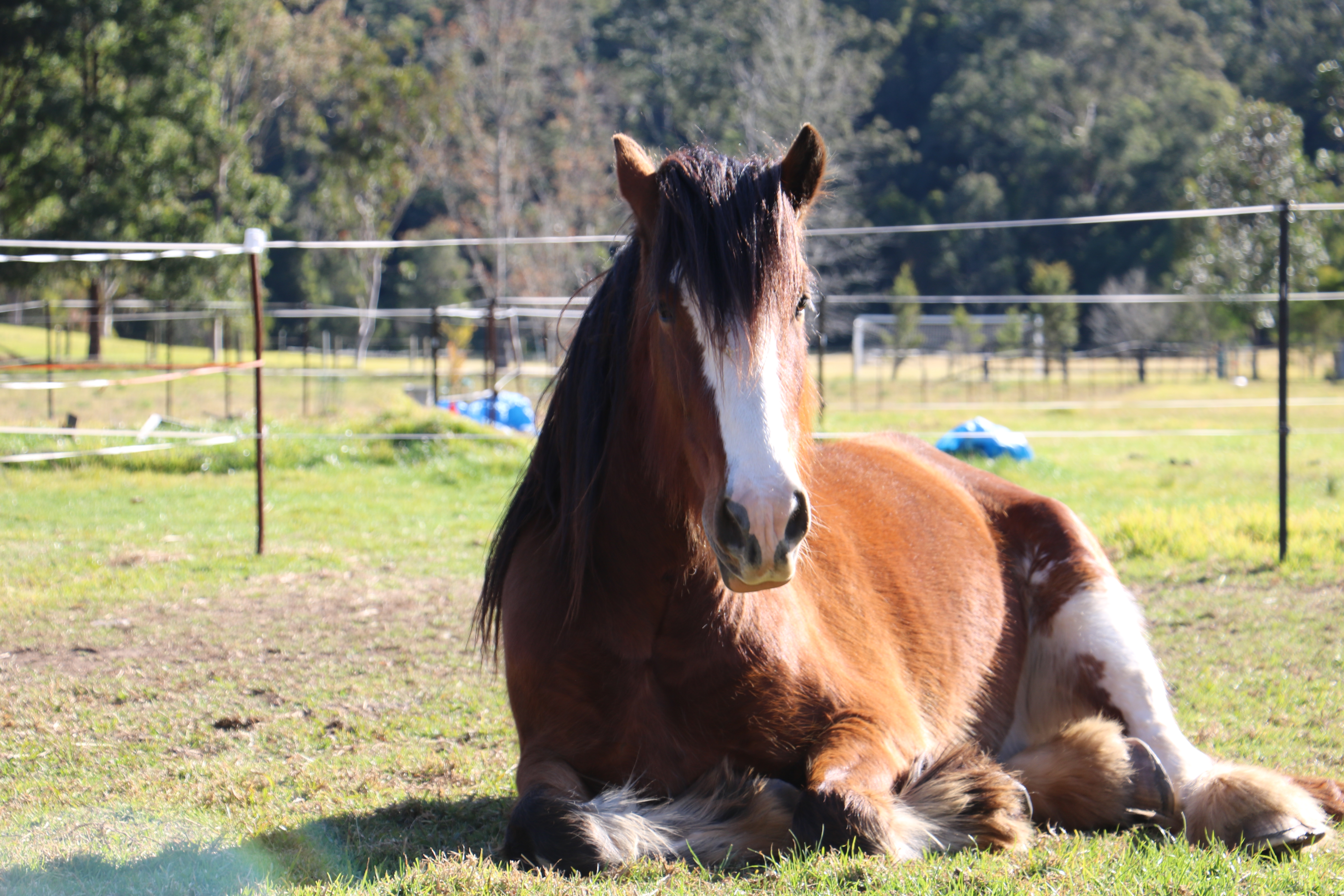
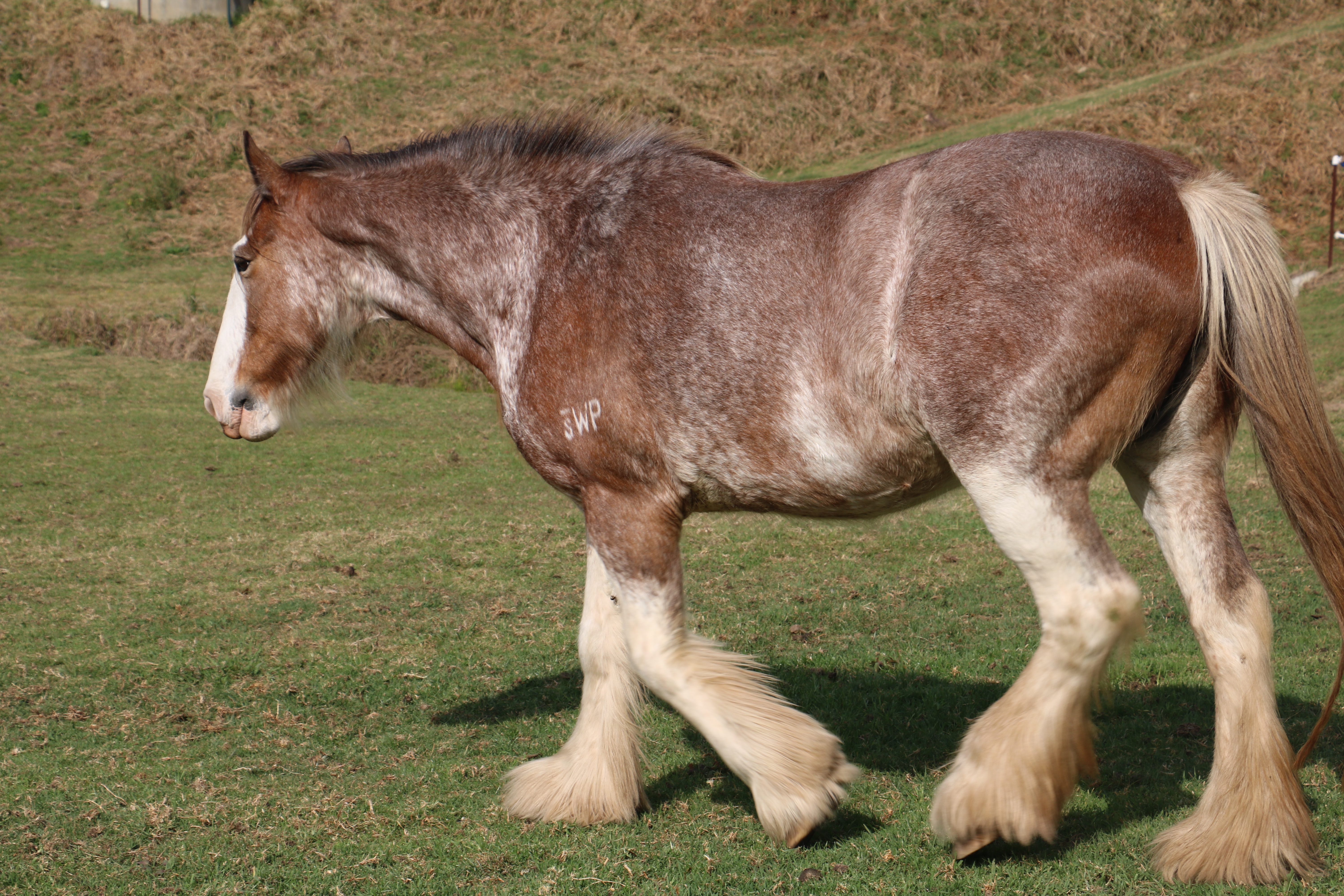
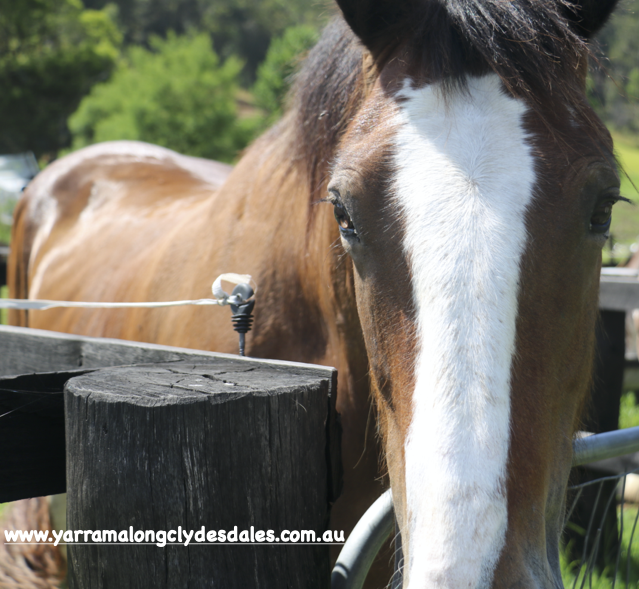
Meet Dusty May, Hercules, Jax & Murphy

Gentle, calm and patient — these horses are wonderful with visitors of all abilities.

Dusty May the Clydesdale

Dusty May

Hercules the Clydesdale

Hercules

Jax the Clydesdale

Jax

Murphy the donkey

Murphy

These Are Not Show Horses. They Are Working Horses With 30 Years of Welcoming Visitors.

Dusty May, Hercules, Jax and Murphy have spent their lives around people of every age and ability. They are calm because they have earned it, and gentle because it is simply who they are. Your residents are in the very best of company.

Make an Enquiry

Therapeutic Value

Animal-Assisted Interaction & Older Adults

The therapeutic value of animal interaction for older adults is well-documented. Research published in peer-reviewed journals consistently finds that time spent with calm animals — particularly in natural, outdoor settings — produces meaningful, measurable improvements in wellbeing for older people, including those in residential care.

Clydesdale horses offer something particularly powerful: their size means they cannot be ignored or minimised. When you stand near a Clydesdale, it takes up your whole field of vision. That physical presence is grounding in a way that smaller animals simply are not — and for residents who live in the compressed, routine world of a care facility, that sense of scale and presence is itself therapeutic.

For residents living with dementia, the effect is often remarkable. The sensory richness of the experience — touch, smell, sound, the warmth of the animal — reaches parts of memory and emotion that verbal or visual cues may not. Families regularly tell us that a resident who rarely speaks became animated and communicative during and after the visit.

Documented benefits include:

  • Reduced anxiety and stress levels, including in residents with dementia
  • Lower blood pressure and reduced cortisol (stress hormone) levels during and after animal interaction
  • Elevated mood and increased positive affect, often lasting well beyond the visit itself
  • Increased social engagement — residents interact more with each other and with staff after an outing
  • Stimulation of long-term memory through reminiscence triggered by sensory cues
  • Improved sense of purpose and connection — caring for or simply being near an animal restores a sense of agency
  • Physical benefits: walking, reaching, patting — gentle movement that many residents would not otherwise seek out
  • Emotional warmth — the simple, uncomplicated affection of a calm animal has no substitute

Planning Your Visit

Everything Your Activities Team Needs to Know

Here is the practical information you need to plan the visit with confidence and to prepare your residents well in advance.

Session Details

Session Duration 2 hours (flexible)
Start Time 10:00am
Group Size Up to 50 people
Wheelchair Access Full — entire visit
Toilets Portable toilet on site
Parking Coach & bus on-site
Seating Undercover, all areas
Experience 30+ years welcoming visitors

What to Prepare Your Residents For

A small amount of preparation goes a long way towards making the visit as enjoyable as possible for your residents.

  • Footwear: Closed shoes are recommended. No thongs or high heels. Comfortable, supportive shoes are ideal.
  • Clothing: Comfortable, practical clothing. Nothing too formal — this is a farm and it is real.
  • Expectations: Let residents know they will be close to real, very large, very gentle horses. Some residents may feel an emotional response — this is completely normal and entirely welcome.
  • Allergies: If any resident has a known allergy to animals or hay, please advise us when you book so we can discuss options.
  • Carer ratio: We recommend a minimum of one carer per four residents to ensure everyone gets the most from the experience. Your accompanying staff can help us keep the pace right for your group.

Pricing

Admission — Individual & Group

$70
Adult

Per person general admission. Includes full 2-hour session.

Free
Under 10

Children under 10 years of age — free admission.

Groups

Custom group pricing available for aged care facilities and tour bookings of 10 or more. Contact us to discuss your group's needs and we will tailor a quote.

Group bookings of 10+ — please use our group enquiry form or call 0434 523 344 for a tailored quote.

What People Say

Several of our residents haven't spoken much at all for months. After the visit, they were animated and talking all the way home on the bus. One lady told me she hadn't touched a horse since she was twelve years old. She cried — happy tears. It was one of the most meaningful outings we have ever run.
Activities Coordinator, NSW Aged Care Facility

Frequently Asked Questions

Questions from Activities Coordinators

Everything we are regularly asked by aged care activities teams planning a group visit.

Is the entire visit truly wheelchair accessible?
Yes — the full visit, from coach drop-off to the horses and back, is accessible in a standard wheelchair. The surface throughout is firm and flat. There are no steps, no significant ramps, and no sections of loose gravel or uneven ground that would be difficult to navigate. We have successfully welcomed groups with multiple wheelchair users and the experience is the same for every resident regardless of mobility.
Can residents use four-wheel walkers or walking frames throughout the session?
Absolutely. Walkers and walking frames are not a problem at any point in the visit. The terrain is stable and predictable, and the width of all walkways comfortably accommodates frames. Residents who use a walker can get right up to the horses without difficulty.
Is seating available throughout the entire session, or will residents need to stand for parts of it?
Seating is available at every stage of the visit and we never ask residents to stand if they do not want to. Undercover seating is positioned throughout — in the welcome area, during the farm orientation, and at the horse interaction area. Residents can remain seated for the entire session if that is what they need, including when the horses are present. No one is left standing in the sun or left out while others are seated.
Can the pace of the session be slowed down or adjusted on the day?
Yes, completely. The 2-hour session is a guide, not a rigid schedule. If the group is taking more time at the horses — which most groups do — we stay there. If someone needs to sit and rest before moving on, we stop. If the group arrives a little late, we absorb that without stress. We have hosted hundreds of group visits and we are very good at reading the room and adjusting quietly. Your job on the day is to be with your residents, not to manage time.
Is there adequate parking for a coach or minibus?
Yes. Coach and bus parking is available directly on site. The drop-off point is close to the start of the session, so the walk from vehicle to first activity is minimal. Please mention the type of vehicle when you make your enquiry so we can confirm the right parking area for your group.
What is the best way to prepare residents before the visit?
A gentle, positive preview works best. Let residents know they will be visiting a real working farm with very large, very gentle horses — not show animals or wildlife, but working horses that are used to people. Showing a photograph of the horses in the days before the visit can help residents with dementia or anxiety build positive anticipation. Let them know there is seating available throughout and that no one will be asked to do anything they are not comfortable with. Encourage them to wear comfortable shoes and clothing they do not mind getting a little farm dust on.
What is the therapeutic and emotional value of this type of visit for aged care residents?
Research into animal-assisted interaction consistently shows meaningful benefits for older adults: reduced anxiety, elevated mood, lower blood pressure, stimulation of long-term memory, and increased social engagement. Clydesdales are particularly effective for residents who grew up in rural Australia because the horses trigger deep reminiscence — memories, stories, and emotions from formative years. For residents with dementia, the multi-sensory nature of the experience (touch, smell, sound, the warmth and presence of the animal) often reaches parts of memory and identity that standard facility activities simply cannot access. Many activities coordinators tell us it is the most impactful single outing they run each year.
How many people can the group session accommodate?
Group sessions accommodate up to 50 people including residents, accompanying carers, and family members. For larger groups, please contact us to discuss options — we want to make sure every person in the group has a genuine experience and is not just a face in a crowd.
Do you take school groups at the same time as aged care groups?
No. We do not mix aged care groups with school groups. Your session is exclusively for your group, giving your residents a calm, quiet, unhurried experience without the noise and energy of children running around. This is important to us — we want your residents to feel that this visit was arranged specifically for them.
How do we book a group visit?
The easiest way is to call us directly on 0434 523 344 to have a conversation about your group's specific needs — numbers, mobility requirements, preferred date, and any particular considerations. Alternatively, complete our online group enquiry form and we will call you back promptly. We strongly recommend getting in touch early, as group dates — particularly on weekdays — book well in advance.

Ready to Book Your Aged Care Group Outing?

Call us on 0434 523 344 or complete the group enquiry form — we will get back to you promptly to discuss your group's needs, confirm availability, and tailor the visit to your residents.